Quick Chat
A six-part series about Rohan, the colleague who fixes everyone’s day: people bring him their problems, or he spots one and steps in. In Episode 4, Manav is quitting, and Rohan offers to carry his box.
- Series
- Quick Chat · six episodes · Zomato
- Format
- Scripted series · 9:16 · about two minutes each
- This film
- Episode 4 · Fail faster, win sooner
- Role
- DOP · assistant director · edit
- Directed by
- Lakshay Dhalla
- Ran on
The idea
One problem, one walk,
one lesson.
The show
Rohan anchors all six episodes. Sometimes a colleague comes to him with a problem; sometimes he notices a friend has one and goes to them. Each episode is one problem, solved in a two-minute walk through the office.
Why it exists
Quick Chat is a view from the inside. It shows people outside Zomato how the company works, through the problems colleagues really face and the way they get solved.
What you take away
Every episode ends on one idea from the way Zomato works: there are no bosses, only owners; ‘bad’ is a good word; fail faster, win sooner.
The series
Six episodes, six lessons.
Each episode ends on its lesson, and each one plays right here. The first, “No bosses, only owners”, was the pilot: a test of how far the format could stretch before committing to the other five. This page is about Episode 4.
Episode 4
Better to quit than fail?
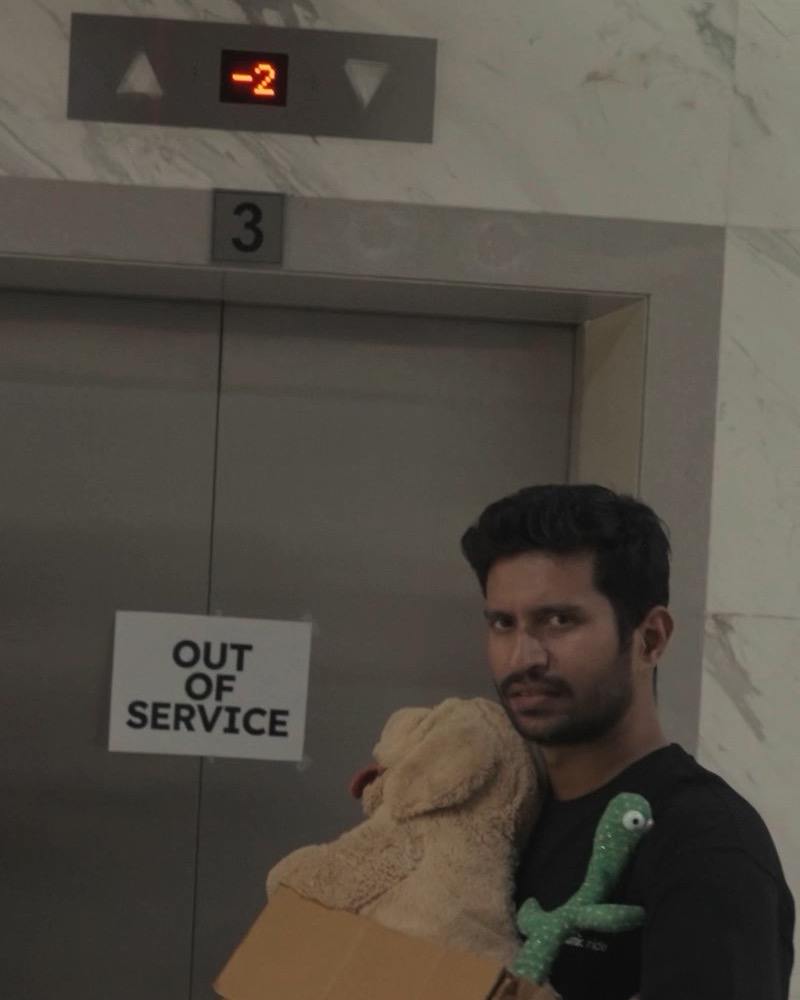
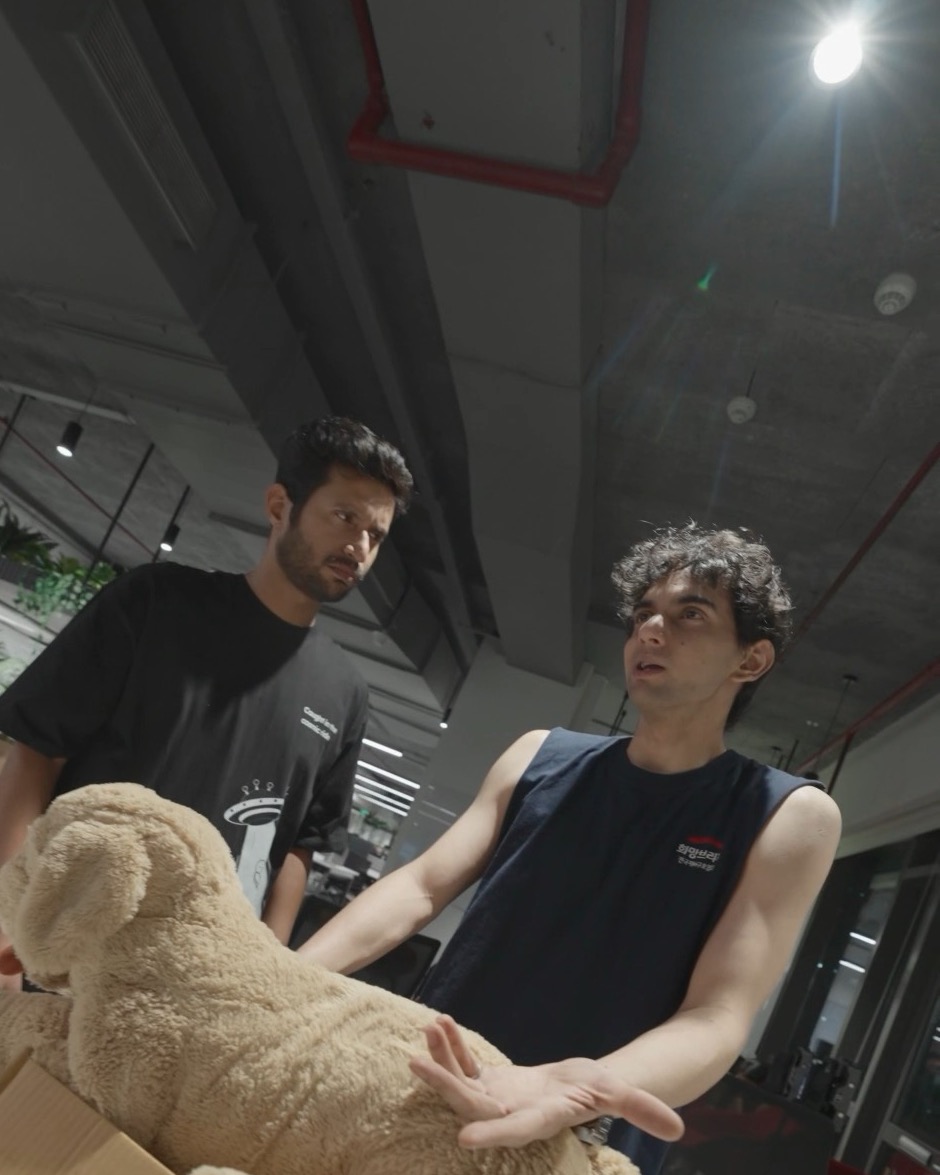
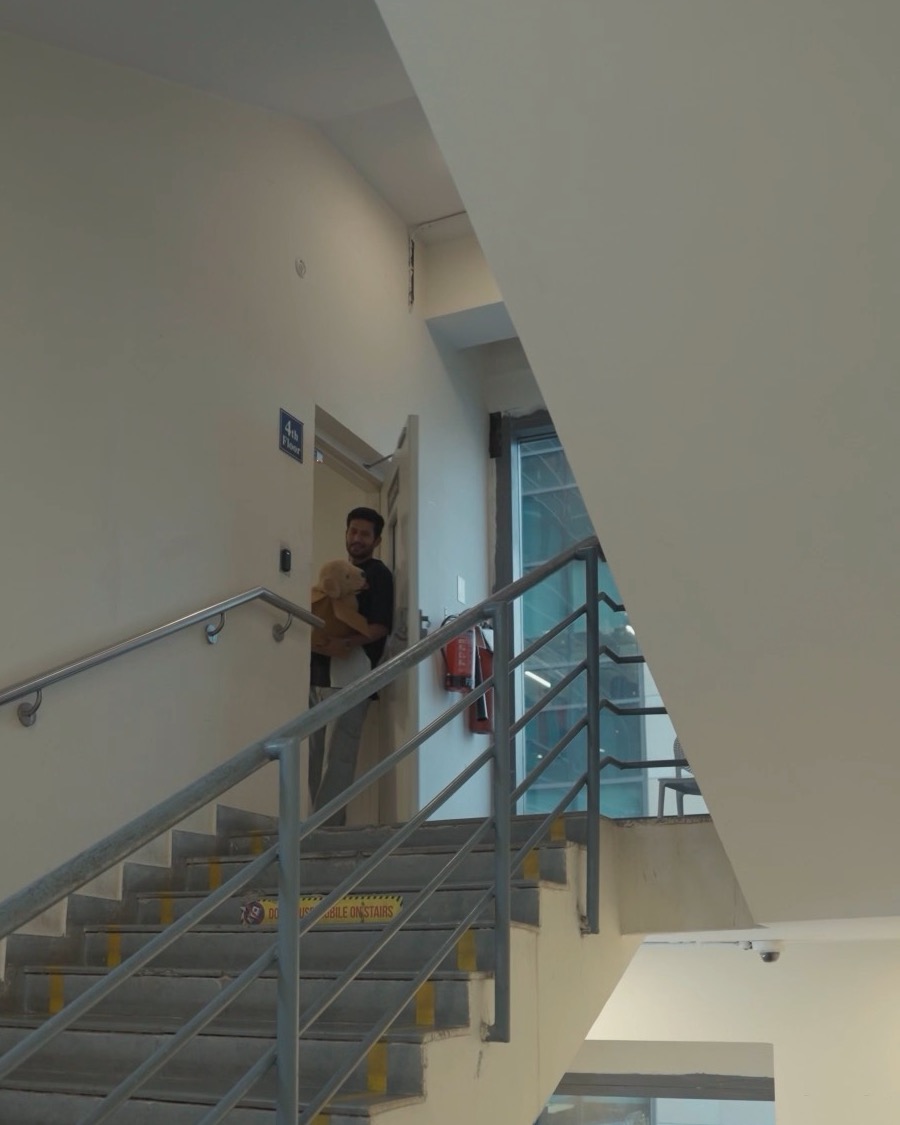
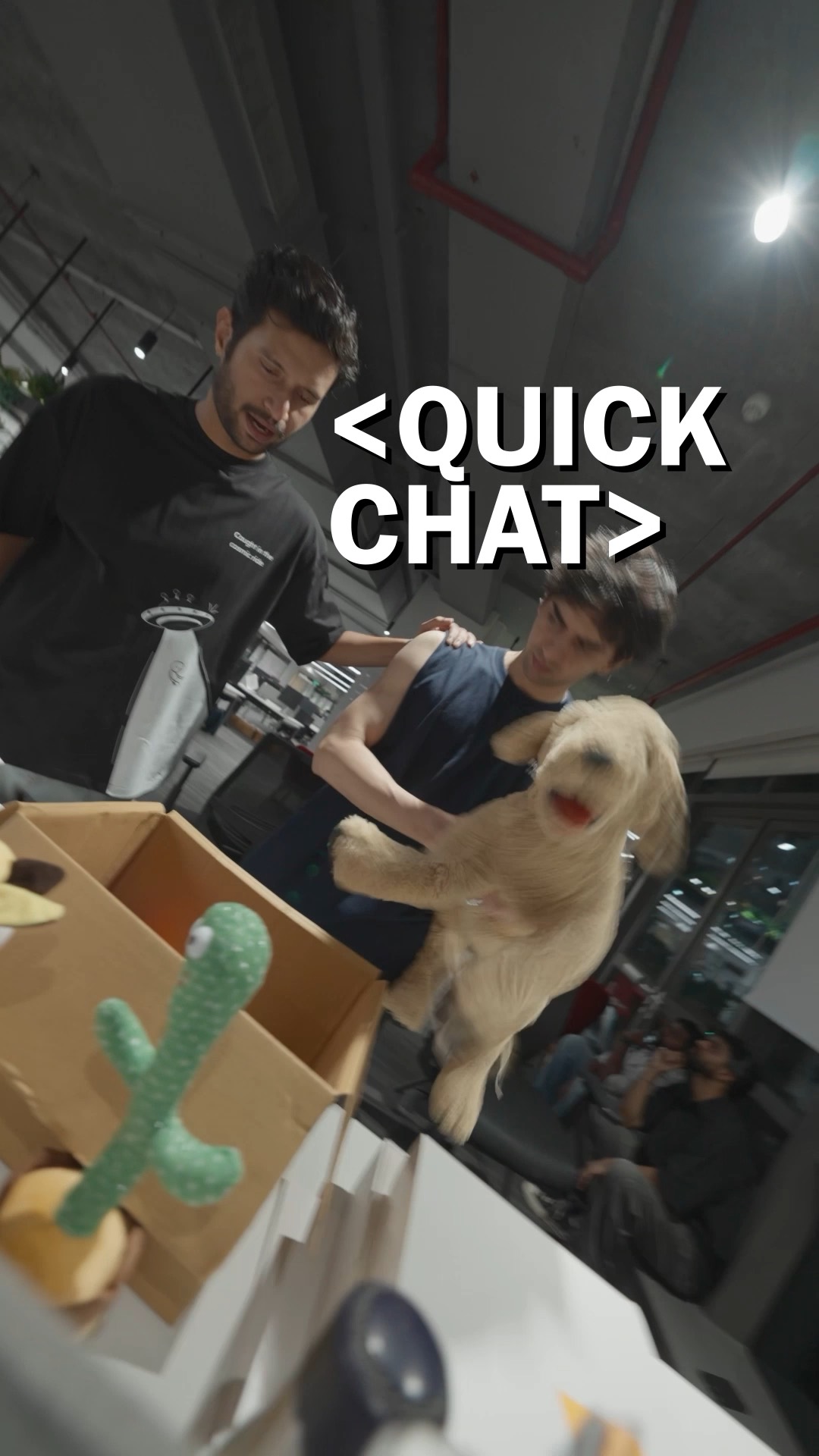
Manav announces he’s leaving and waits for Rohan to talk him out of it. Rohan doesn’t. He picks up the box and walks Manav out, down the stairs, and the walk is how he solves it.
Manav
Afraid he’s about to fail, he’d rather quit first. He expects Rohan, the problem solver, to push back.
Rohan
Accepts it, takes the box and walks him out. Floor by floor, every failure they remember turns out to have been a step forward, until Manav changes his own mind.
The insight
Failing is part of growing. Every time you fail, you get a little better, so the sooner you fail, the sooner you win.
Stills
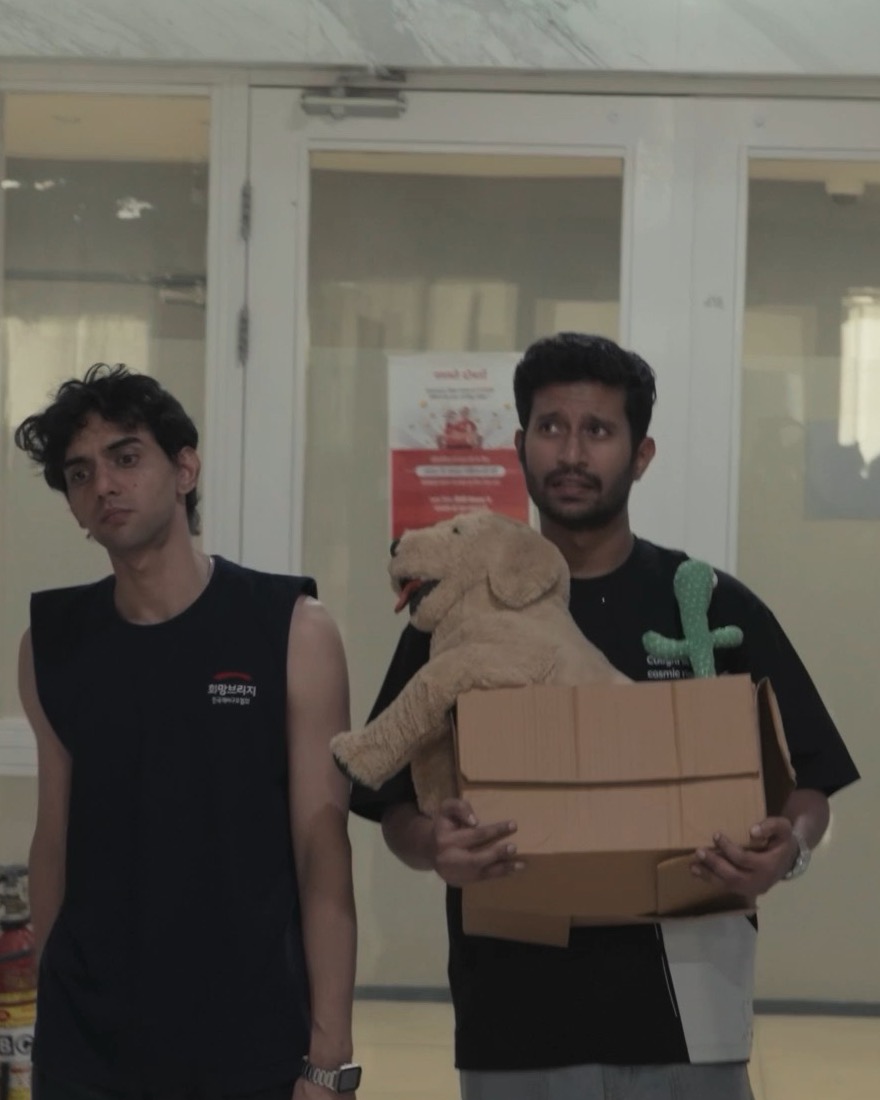
Two episodes a day
How Episode 4 was shot and cut, inside a working office. If you’d rather keep browsing, skip to the next project →
- The shoot
- Behind the scenes
- The edit
The shoot
Two cameras, one take
I shot Episode 4 as one of its DOPs and assisted Lakshay Dhalla, who directed it. We shot all six episodes in three days, two a day, in Zomato’s own office while it was working. Episode 4 was the second of its day, shot from about 5 pm to 9 pm. The actors already knew each other, so the friendship on screen came easily.
Two of us covered the same action from two angles: an extreme wide, at about 14 to 16mm, and a tighter frame. That gave the edit two versions of every moment to cut between, without asking the actors to do it all again.
People were working all around us. Between takes I kept the walkways clear so each take could run clean, and checked every frame and composition with Lakshay before we moved on.
The production was full scale, but the footage stays in log, desaturated. It’s meant to look like a moment caught naturally, as if someone happened to be filming when the quick chat started.
Behind the scenes
Shoot week
The cast reading the scripts together, Manav’s desk being dressed with the teddy bear and the toy car, a scene on the monitor, and me filming another episode’s set.
The edit
The edit table
I cut Episode 4: the pacing and the cut, with my manager’s guidance. I had only just joined the team.
With a wide and a tight of every moment, the cut decides where the joke lives. The wide shows the two of them and the space; the tight catches a reaction. The longest stretch of the stairs stays in one 24-second take, so the walk feels continuous.
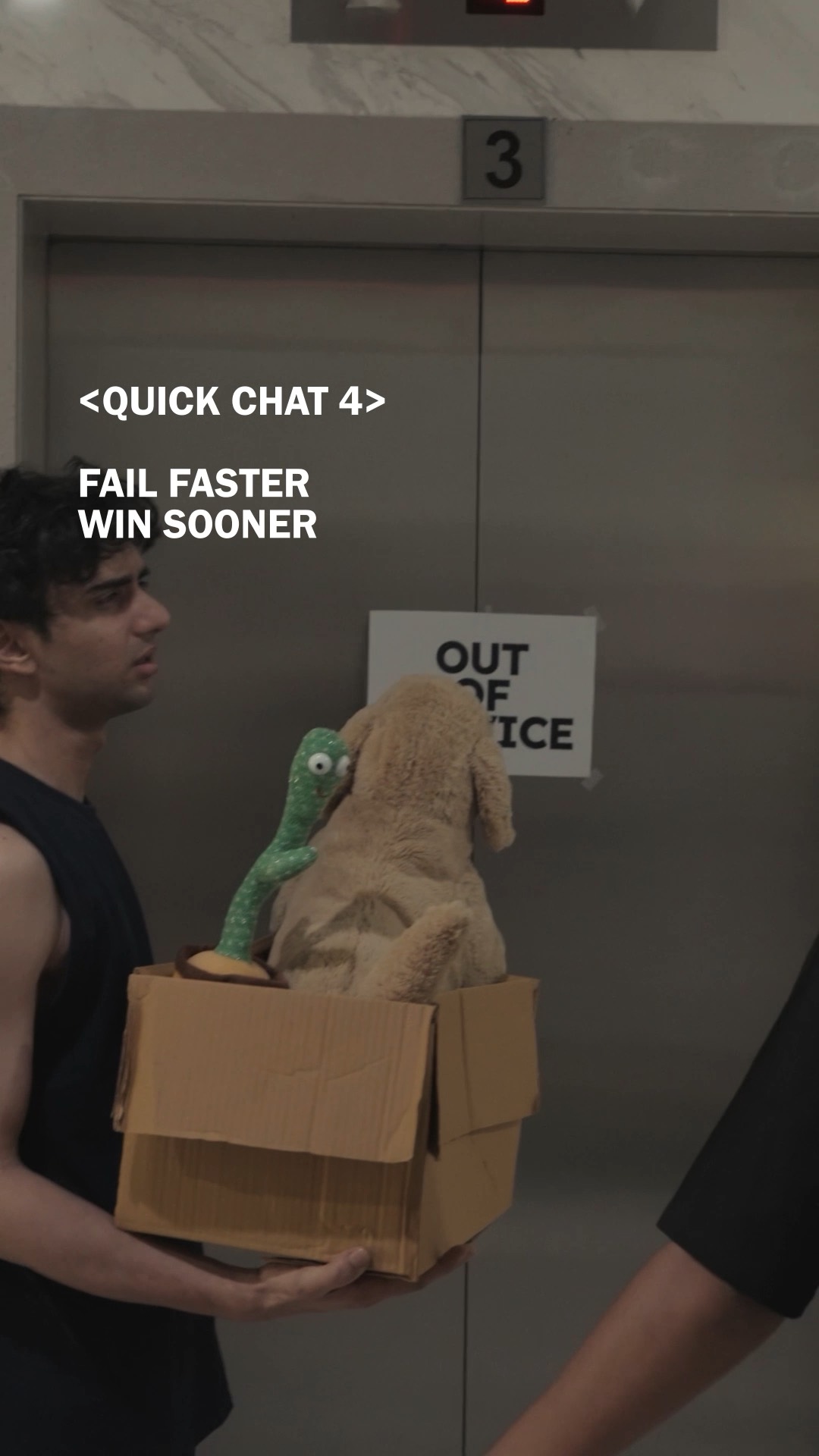
The story moves floor by floor, so the pacing follows the walk: quick at the desk, steady on the stairs, then a pause at the lift for the punchline to land.
23 shots · 2:00
The end card
Fail faster,
win sooner.
Credits · Episode 4
- Direction
- Lakshay Dhalla
- Assistant director
- Sreeram
- DOP
- Jayansh Sharma, Pranathy Pushkar, Sreeram
- Cinematographer
- Lehar Gupta
- Edit
- Sreeram
- Written by
- Hitesh Makwaney
- Producer
- Vishakha Kaushik
- Executive producer
- Lakshay Dhalla
- Senior creative director
- Udayan Chakravarty