Back at Eternal: Anubhav Soni
Anubhav Soni helped build Zomato’s online ordering, left to grow somewhere else, and came back. Episode 6 of a LinkedIn series telling everyone who has left Zomato that they’re welcome back.
- Campaign
- Back at Eternal · Episode 6 of 6
- Format
- Camera film · a conversation, 2:06
- Made for
- Shot on
- 2 × Sony FX3 · Sony A7S III
- Role
- Series format · direction & DOP · edit · design
- With
- Anubhav Soni · Maahira Jain
The idea
Leave. Grow.
Come back.
Back at Eternal has one message for everyone who has ever left Zomato: you’re still welcome here. Go out, gather experience, and bring it home. The people who come back bring more to the company than they did when they left.
Who it speaks to
Anyone who has left Zomato and wondered whether they could come back. And anyone thinking of joining, who wants to see what kind of place this is from the people who know it best.
Why LinkedIn
It’s where former colleagues and future hires follow the company. Each episode is a LinkedIn post, and the series gave Eternal its own look on the platform, which it didn’t have yet.
The returnee
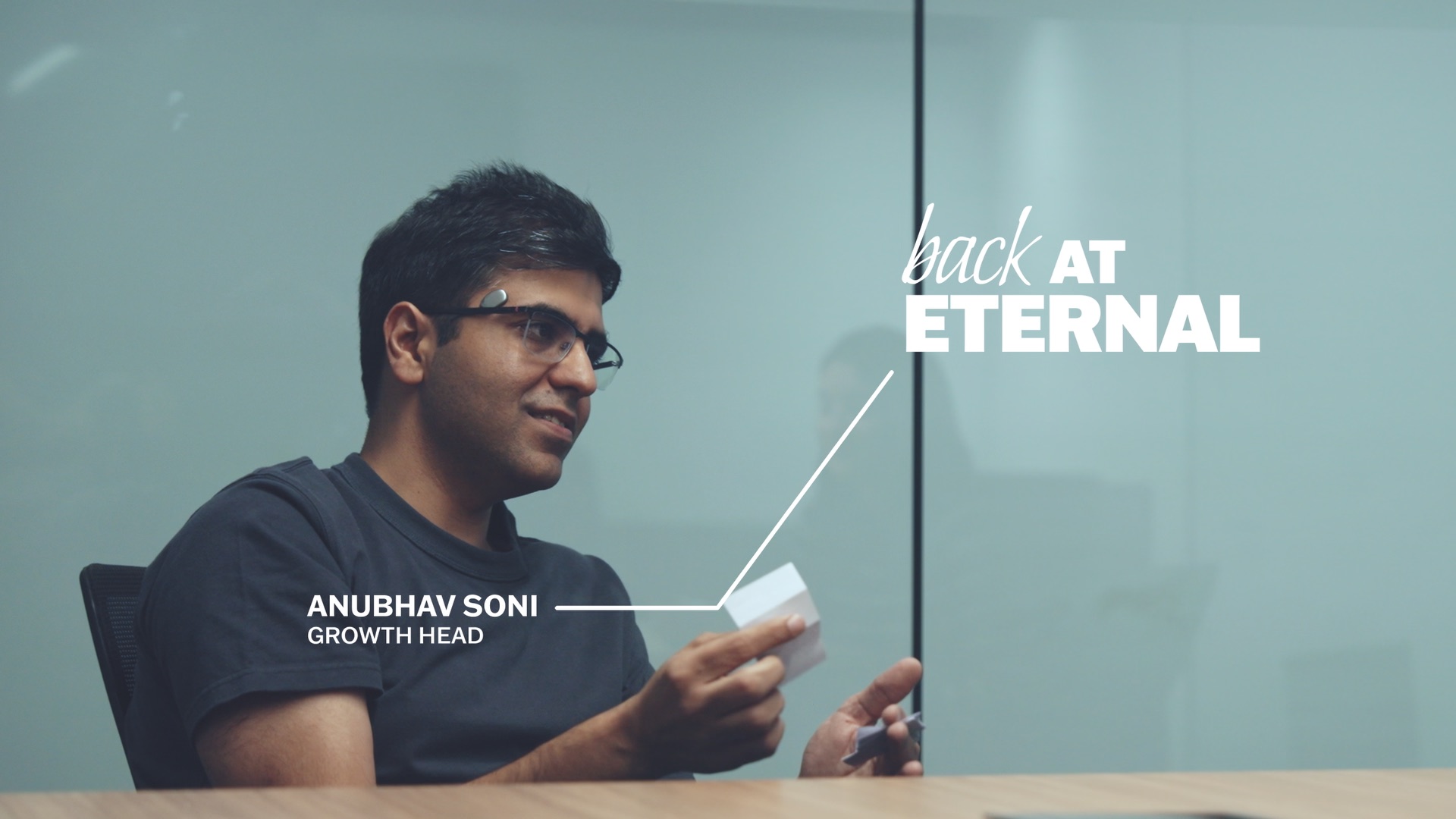
 Anubhav SoniGrowth Head · back at Eternal
Out into the world, and back.
He helped build Zomato’s online ordering, left to learn somewhere else, and came back with it. He remembers doing 10 orders a day. He came back to 3–4 million.
- Jul 2015Joins Zomato
AVP, Global Growth. Part of the core team that launched and scaled online ordering, and led Zomato Treats.
- Oct 2018JUUL Labs
Head of Strategy & Planning, India.
- 2020 – 2024WhatsApp
Strategic Partnerships, then Head of Client Success, Business Messaging.
- Feb 2024Comes back
Back at Eternal, with more than five years of experience from outside.
- TodayGrowth Head
Eternal.
From the film
He isn’t the only one.
Asked about his first work best friend, Anubhav says eight of his ten closest friends are Zomans. Then he says the line the whole series is about. They left, built things somewhere else, came back, and lead teams here today.
“A lot of my close friends have come back as well.”
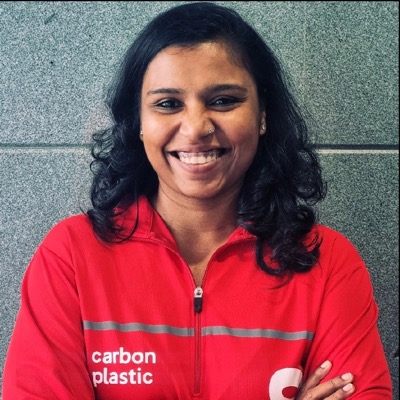 Prerna ParijaLead, People & Culture
- 2015Joins Zomato: part of the core team that built online ordering from scratch
- 2021Leaves as Head, Enterprise Business, after nearly seven years
- 2022Co-founds Bluetick.AI
- 2024Comes back. Today she leads People & Culture
“Prerna, who now heads the people team. She’s back.”
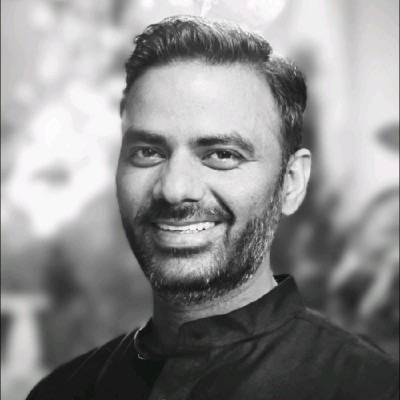 Naresh MehtaLeads analytics & data science
- 2017Joins Zomato: AVP, Data Science & Analytics, leading data science and ML
- 2018CARS24, for more than five years: rises to VP and Global Head, Data Science & Analytics
- 2024Comes back as Business Head, setting up Flywheel, Eternal’s off-platform ad-tech
- 2025Today he leads analytics and data science across Zomato
“Naresh now heads data science for us. He’s back.”
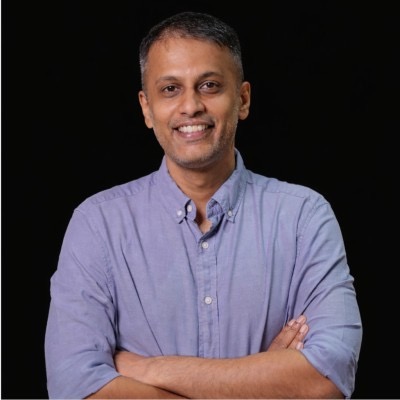 Anand SinhaDistrict by Zomato · back for the third time
- 2011Joins Zomato as roughly its 30th employee; becomes National Sales Head
- 2013Co-founds PressPlay TV, one of India’s first OTT platforms
- 2018Comes back: launches and scales Zomato Gold across 10 countries
- 2020Co-founds leap.club, a professional community for women
- 2026Comes back again, to District by Zomato
Left twice. Came back twice.
The series
A returnee and a fresher, in conversation.
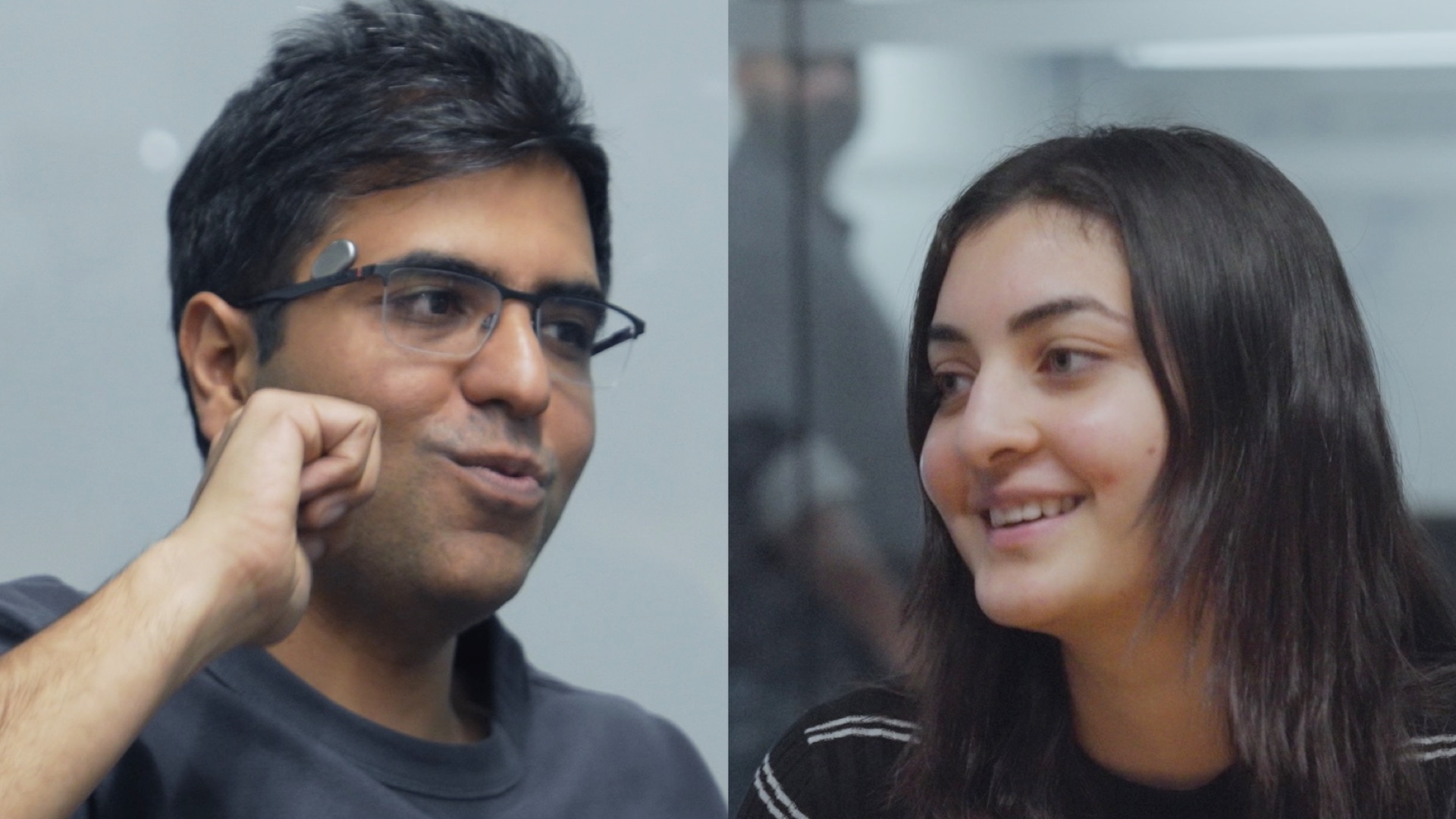
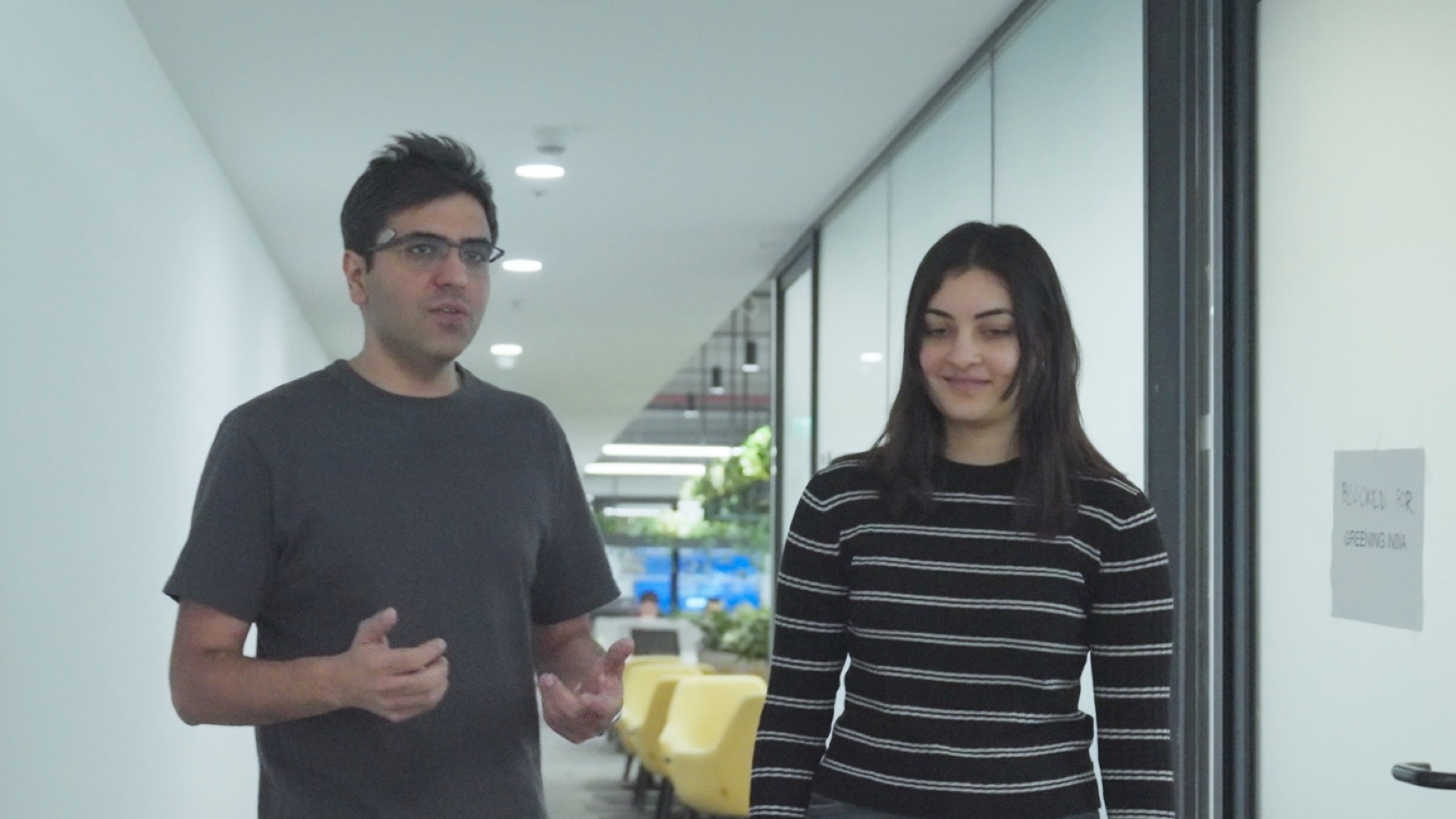
Every episode pairs someone who left and came back with someone who has just joined. Freshers grew up on camera, so they bring the energy and open the senior up. Between them, both audiences are in the room: the people who might return, and the people about to start.
Back at EternalThe returneeAnubhav Soni, Growth Head. The expert who has been out and come home.
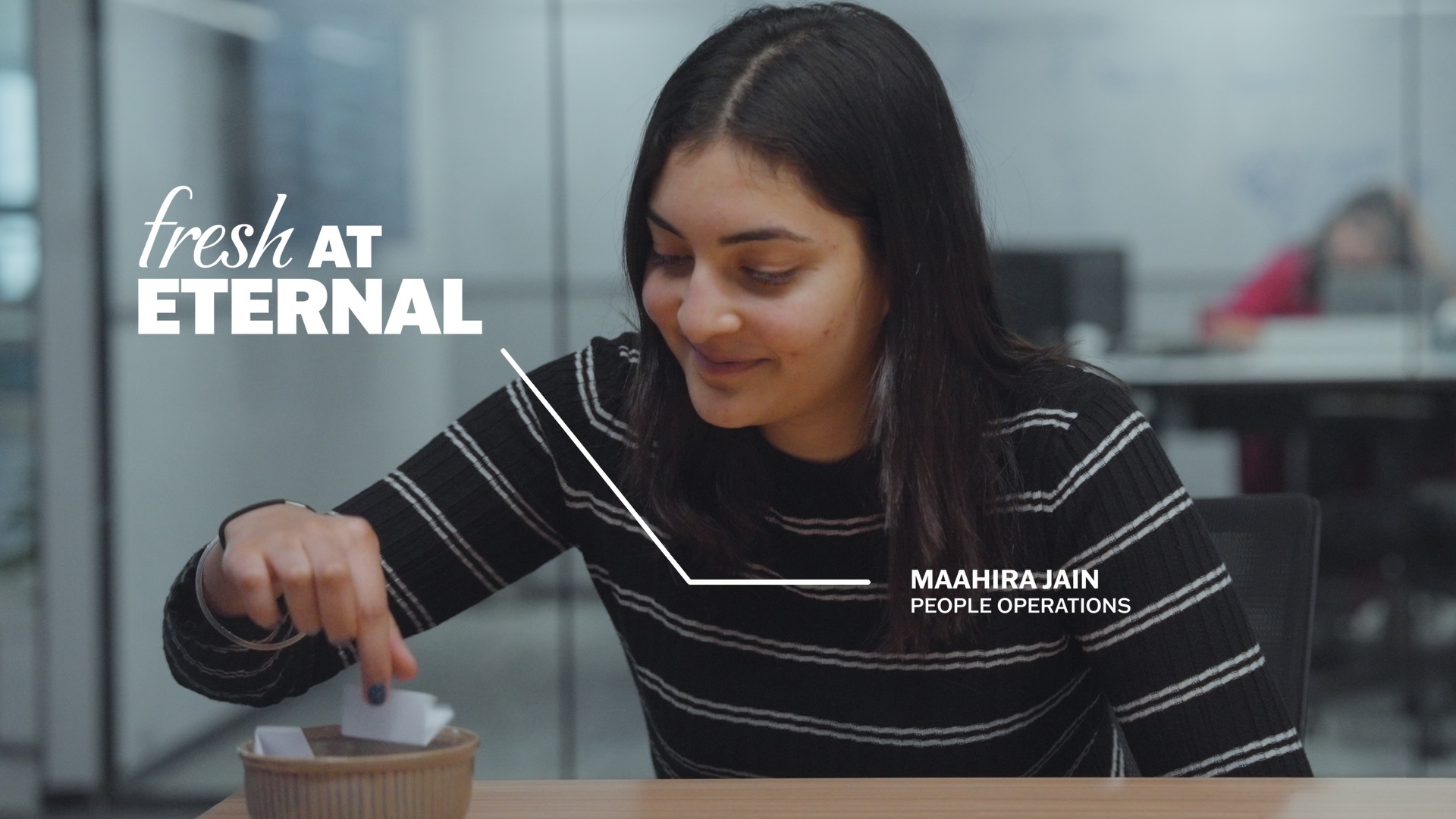
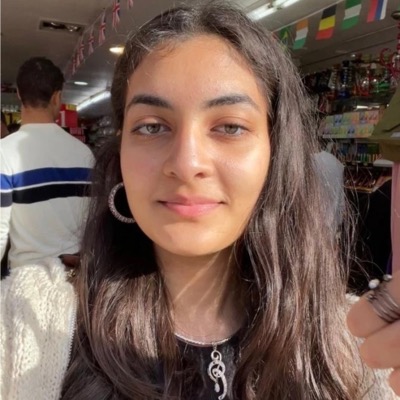 Fresh at EternalThe fresher
Maahira Jain, People Operations. Joined in 2026, after Psychology at King’s College London.
From episode 2, every episode has one. Jenga came before; this one is a chit draw.
Episode 6 is the last of six. By now the series had its language: an entry hook, name slates, questions on screen and an end slate.
Stills
How it was made
From the series’ look and feel to the last cut: pre-production, a game to put him at ease, a shoot in a glass room, and a non-linear edit. If you’d rather keep browsing, skip to the next project →
- The look & feel
- Pre-production
- The chit draw
- The shoot
- The edit
The look and feel
It started with a look for Eternal on LinkedIn
Before the first episode, the look and feel. The company didn’t have a brand look on LinkedIn yet, so the series built one, inspired by global brands: simple, clean, and easy to repeat across six episodes. Restraint is the design.
- Tools used
- DaVinci Resolve
- Adobe After Effects
- Artlist, for the music
Pre-production
The film was made before the cameras came out.
Getting to yes
Anubhav is someone who would rather let his work do the talking, so the first job was making the camera feel safe. Many people are wary of one because they don’t know a film can be shaped. The promise: the narrative is in our hands, and anything can be shaped in the edit.
The pre-interview
With Pritika Agarwal, the lead copywriter, a 30-minute conversation in a packed schedule: his whole past, and what being a business head feels like now. That’s where the insight came from. He feels he could get fired every single day.
Casting the fresher
A loud, bubbly fresher wasn’t the match for a thoughtful, measured guest. The team needed someone who could match his intellectual calibre and share experiences. He studied abroad; so did Maahira Jain, who read Psychology at King’s College London. People Operations beside business: a good mix.
Her brief
Make him comfortable. Open him up. Keep it on level ground, ask open questions, and let him take centre stage. She understood it without being told: she stayed in the background and let him talk.
Pre-production
The chit draw
What made him forget the cameras was a little game. Every question was folded into a chit and drawn from a bowl. Random for him, designed by us: each chit came out of the pre-production conversation, so we knew he’d be comfortable answering it. And each was left open, so he’d go back to his past and remember the things he used to do. He talked, a lot.
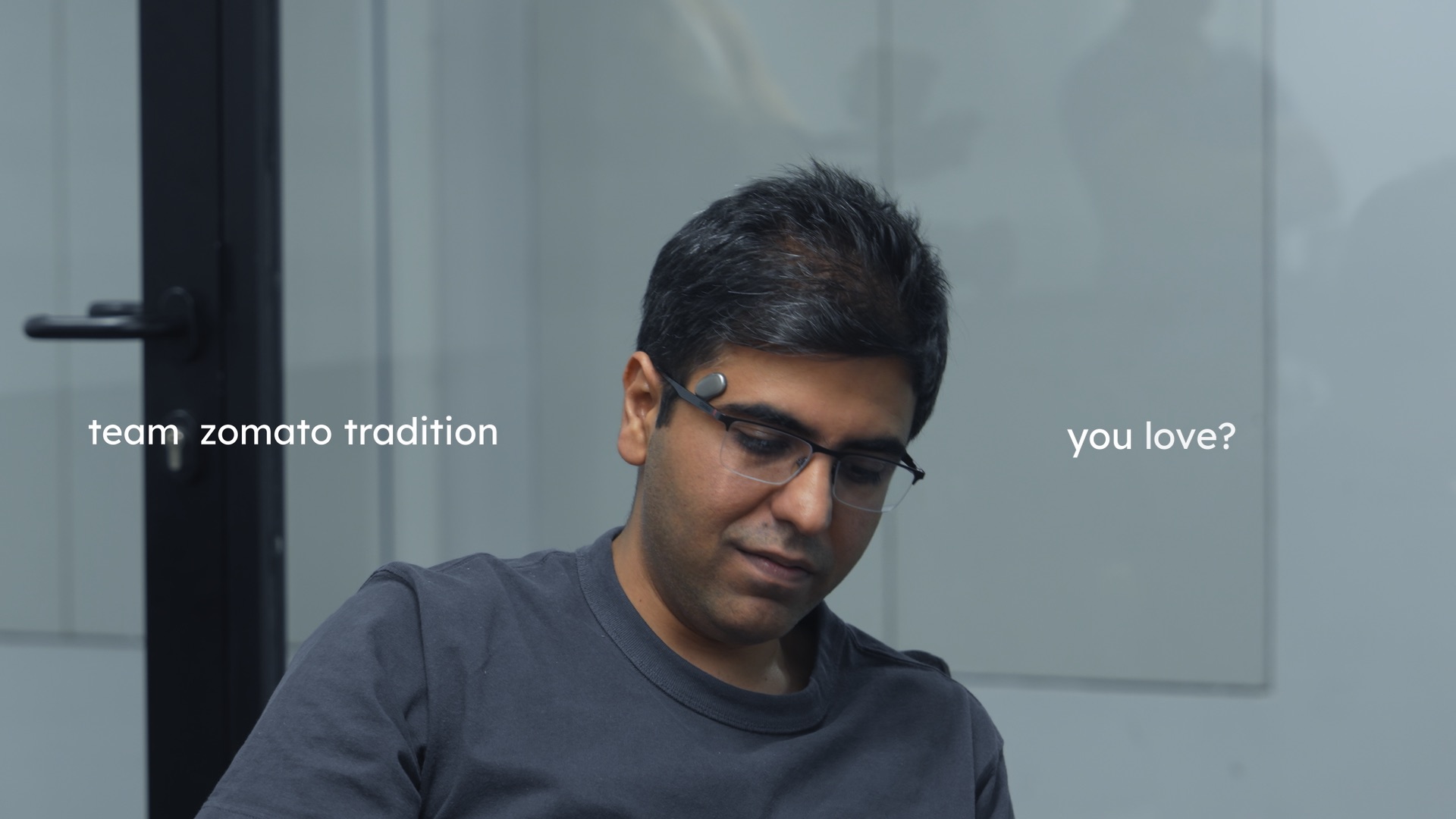
First chitteam zomato tradition you love?
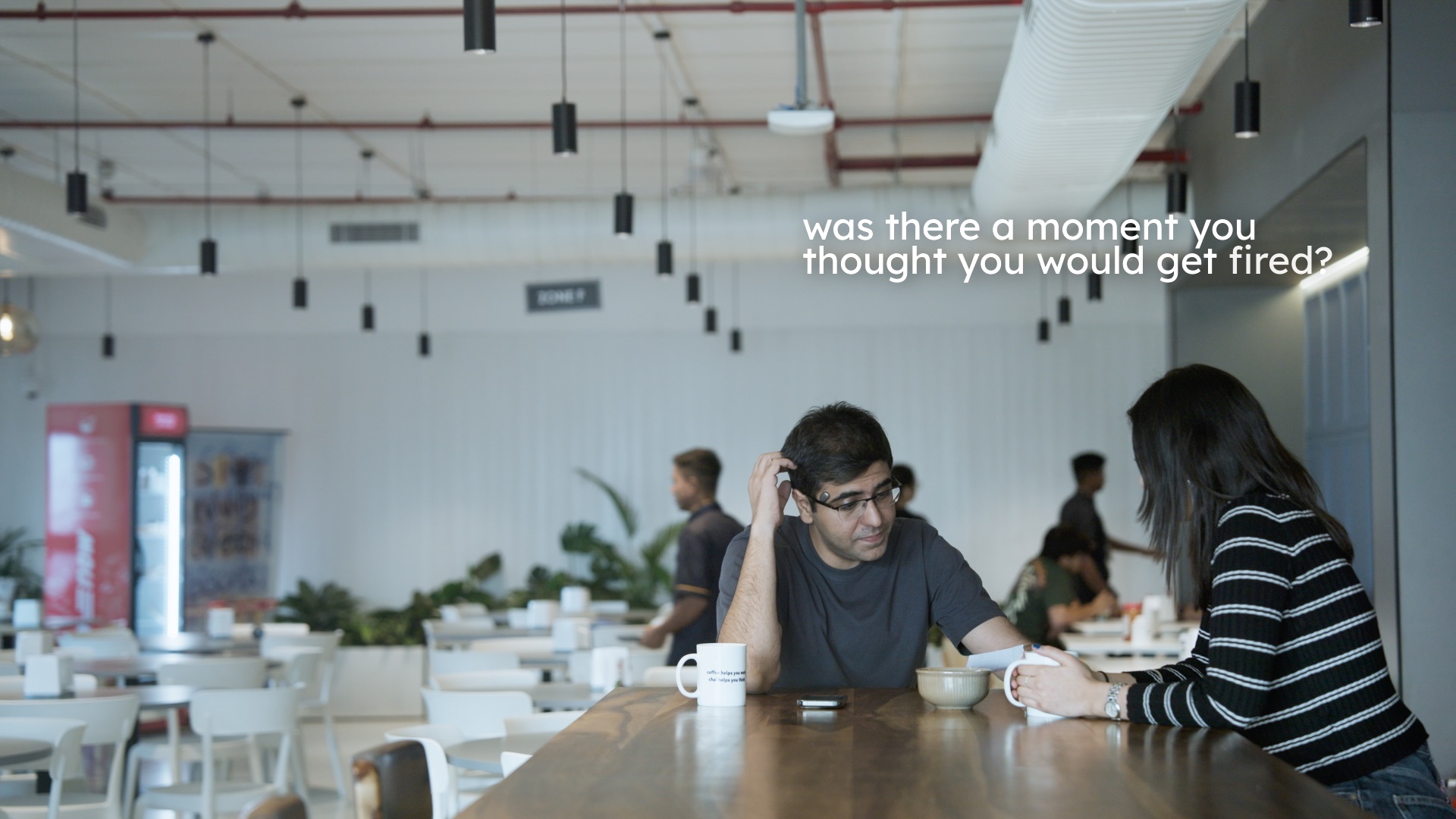
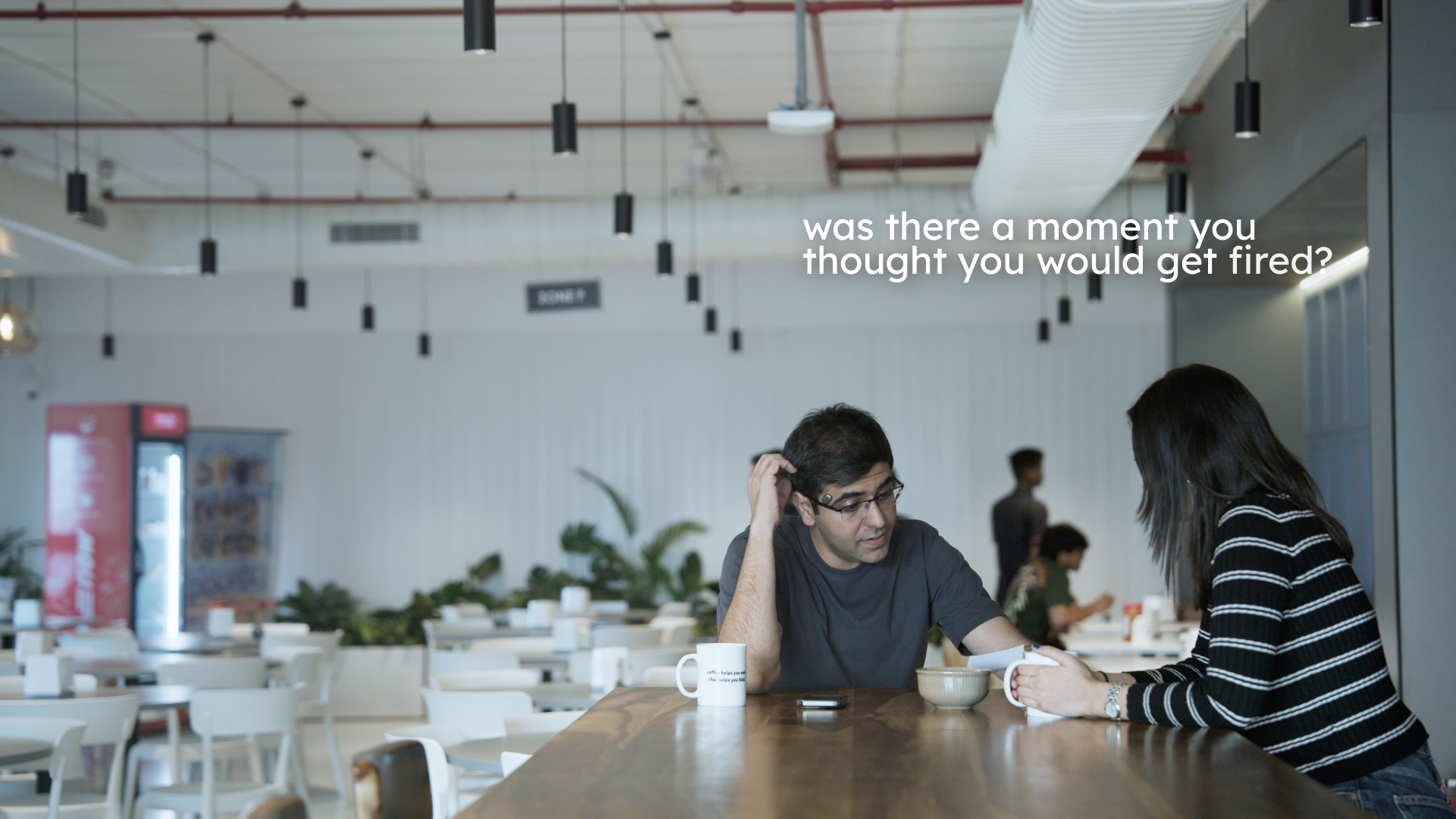
Second chitwas there a moment you thought you would get fired?
Third chitwho was your first work best friend here, and are you still in touch?
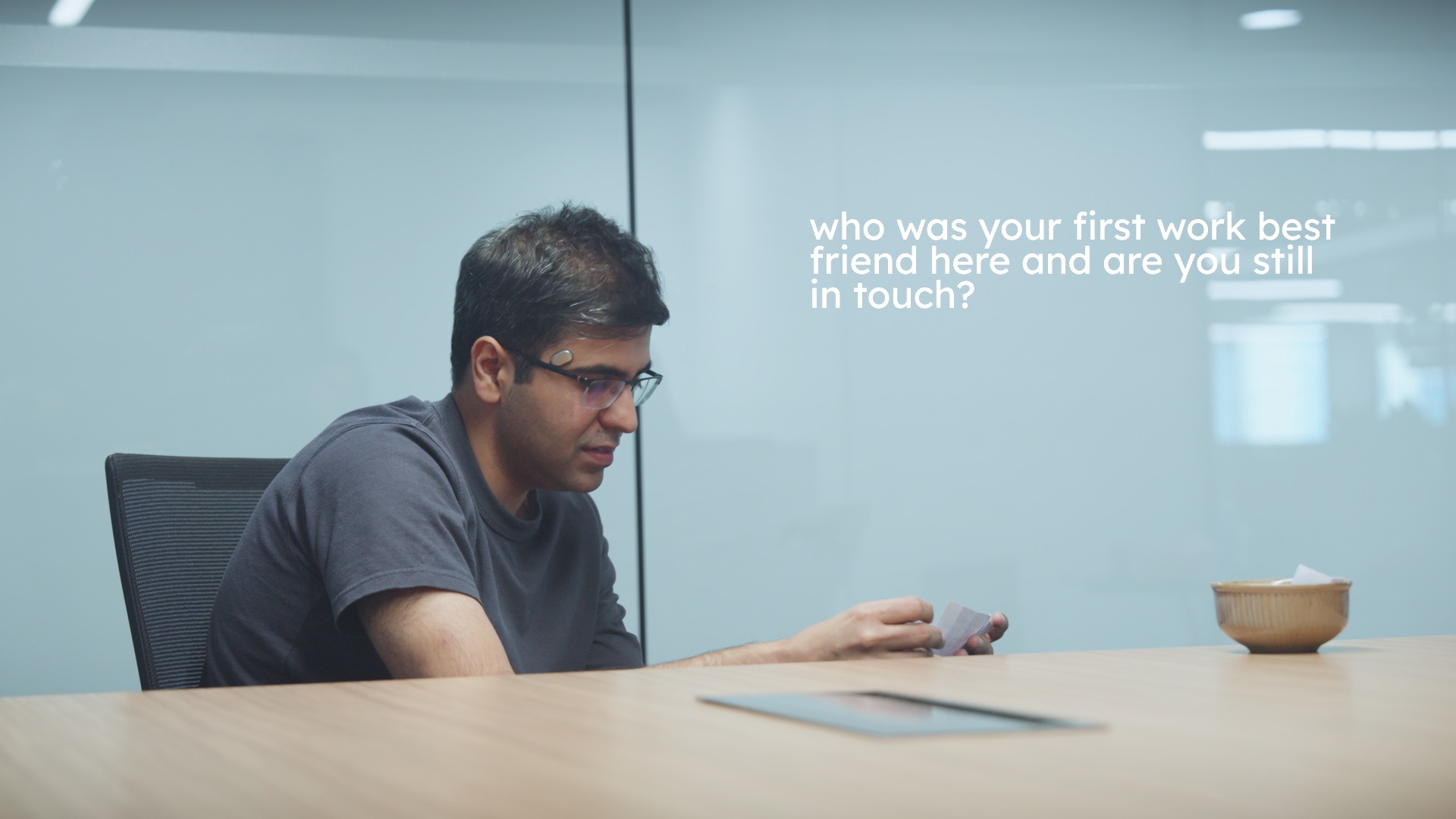
Asked out loudone last question, I promise: what’s your advice for me?
The look and feel
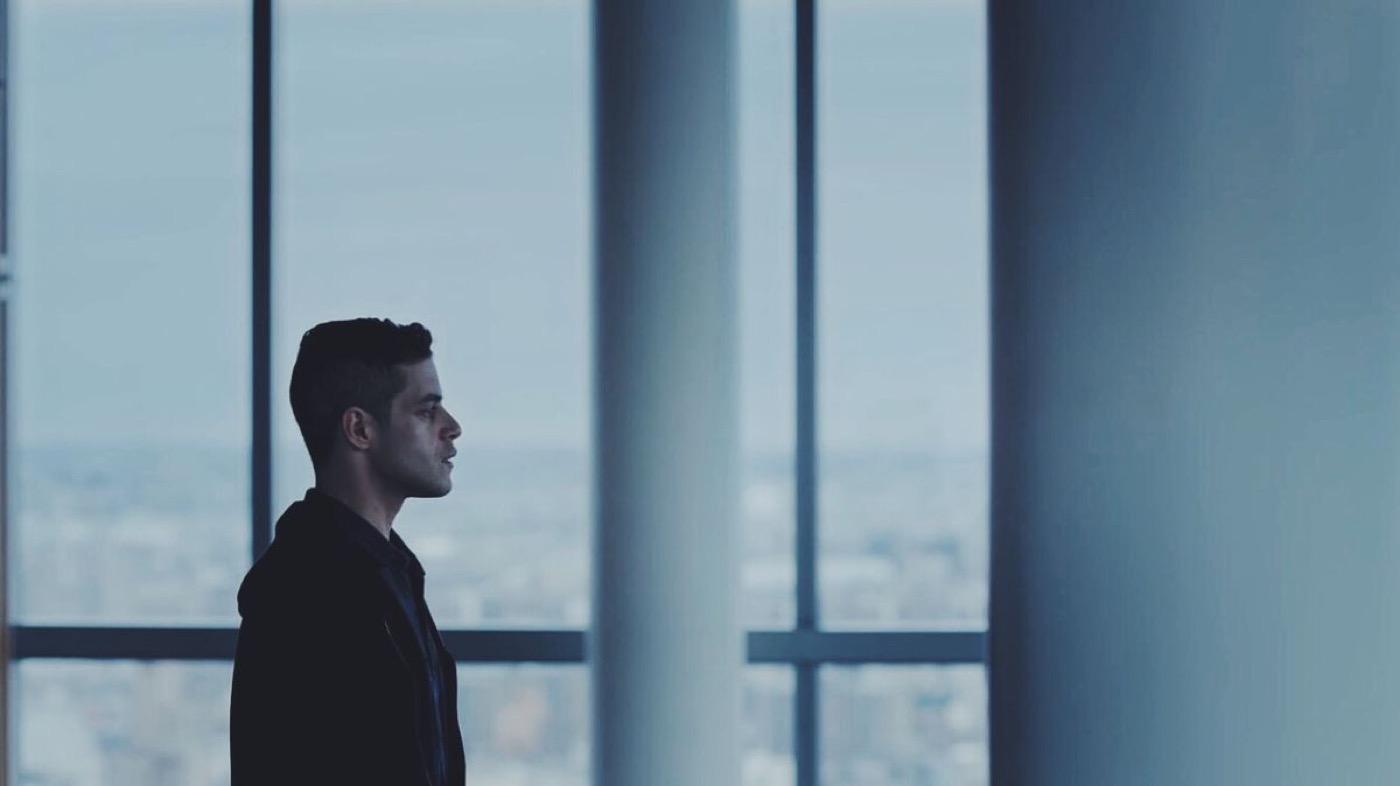
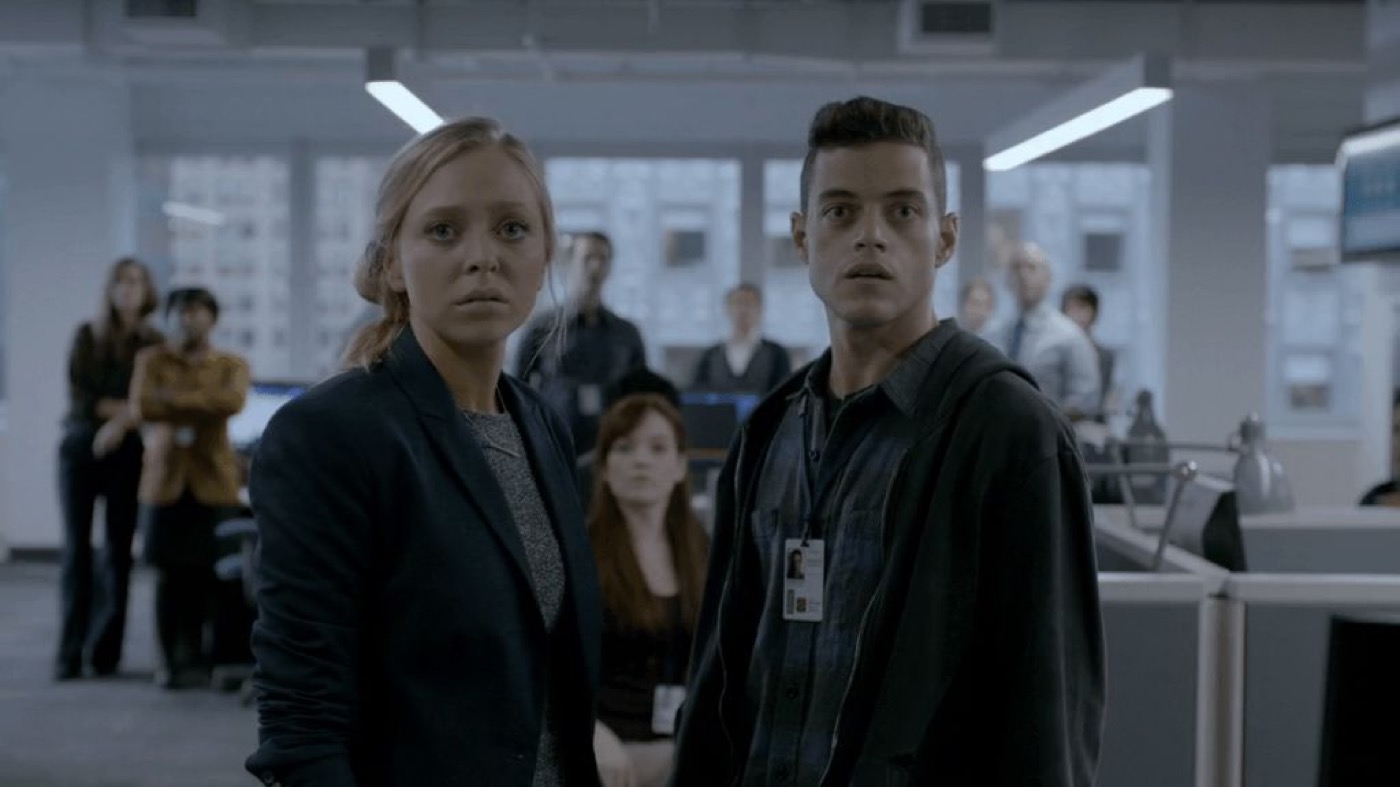
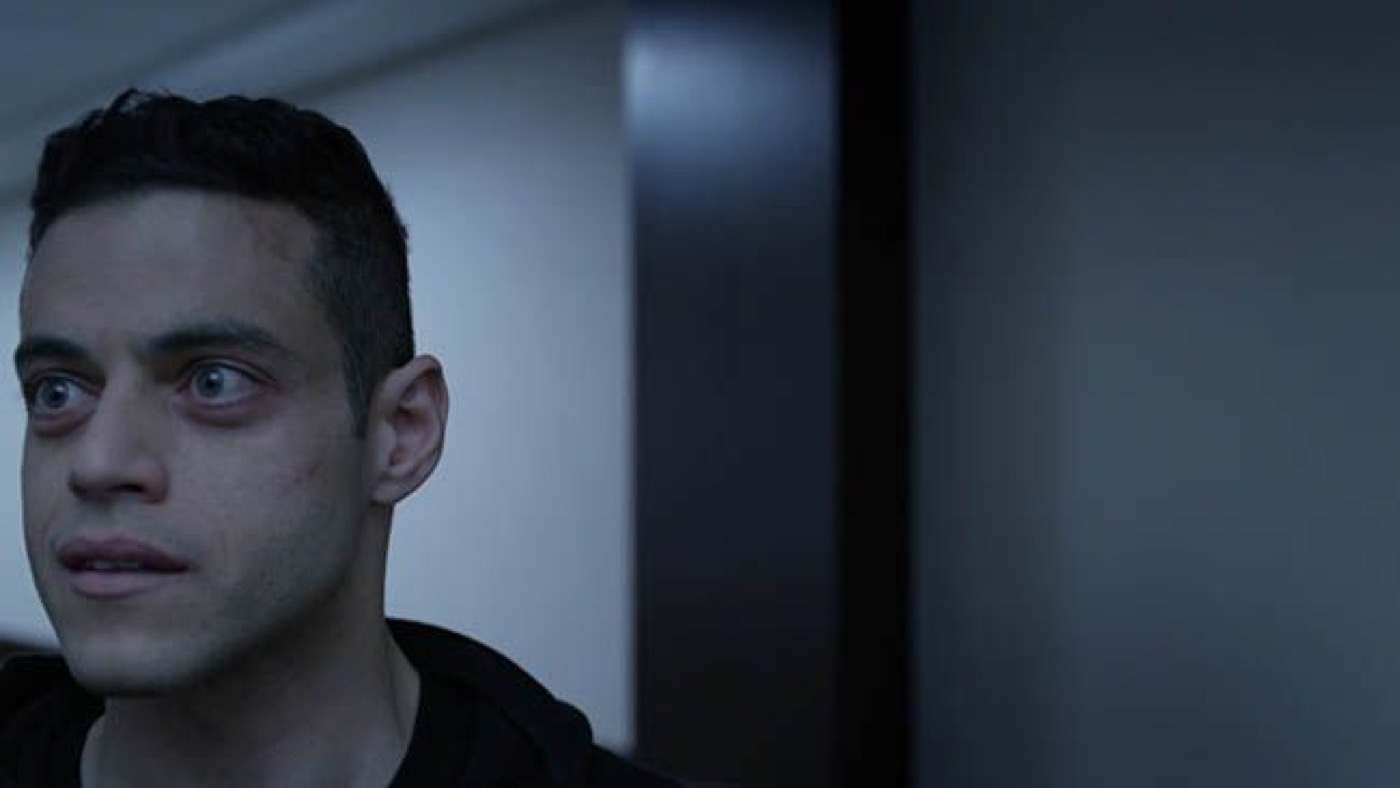
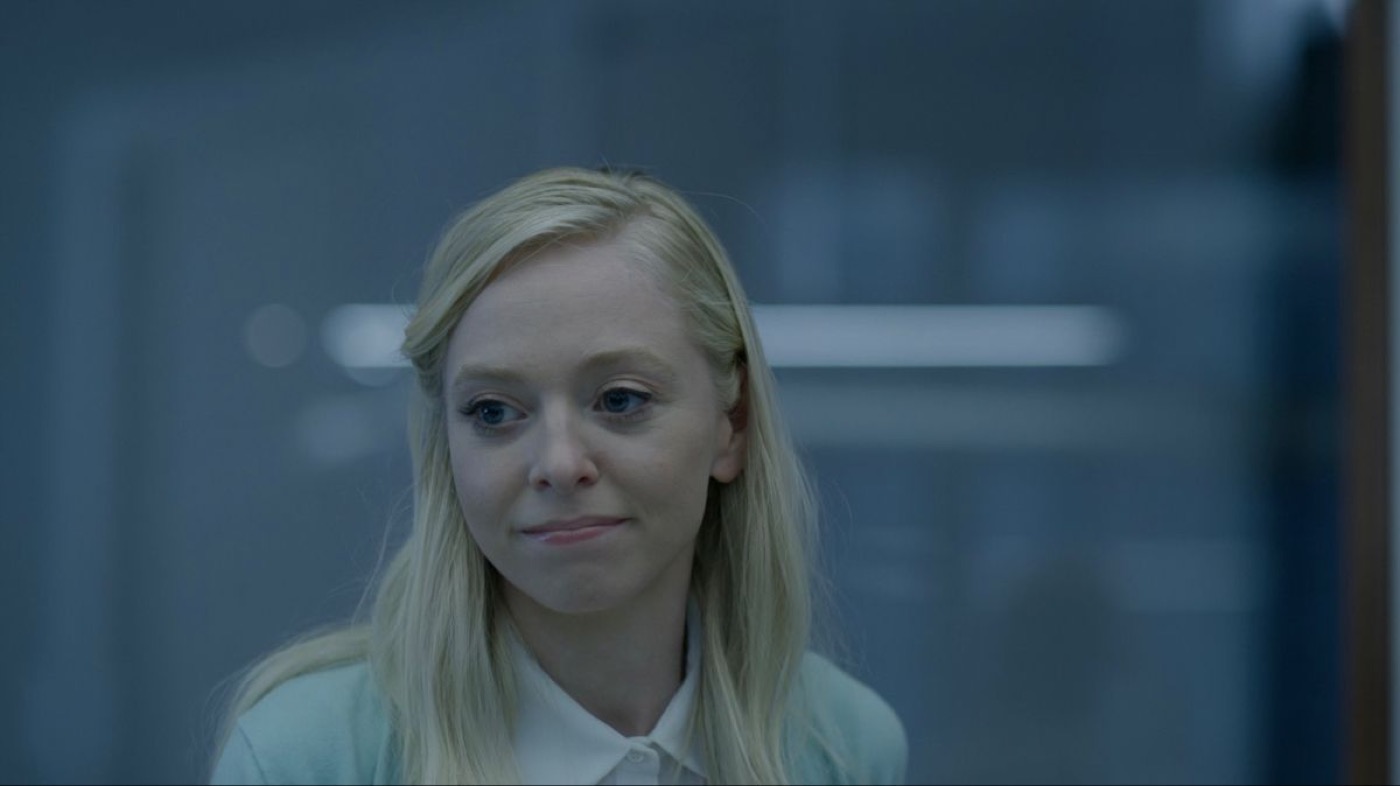
The reference: Mr. Robot
One show to look up to: Mr. Robot, for its flat grade, its wide compositions and its striking, off-centre framing. A reference, not a copy: we took what it does and adapted it to an office in Gurugram, two people and a bowl of chits.
The reference · Mr. Robot
Adapted · Back at Eternal
The shoot
The challenges
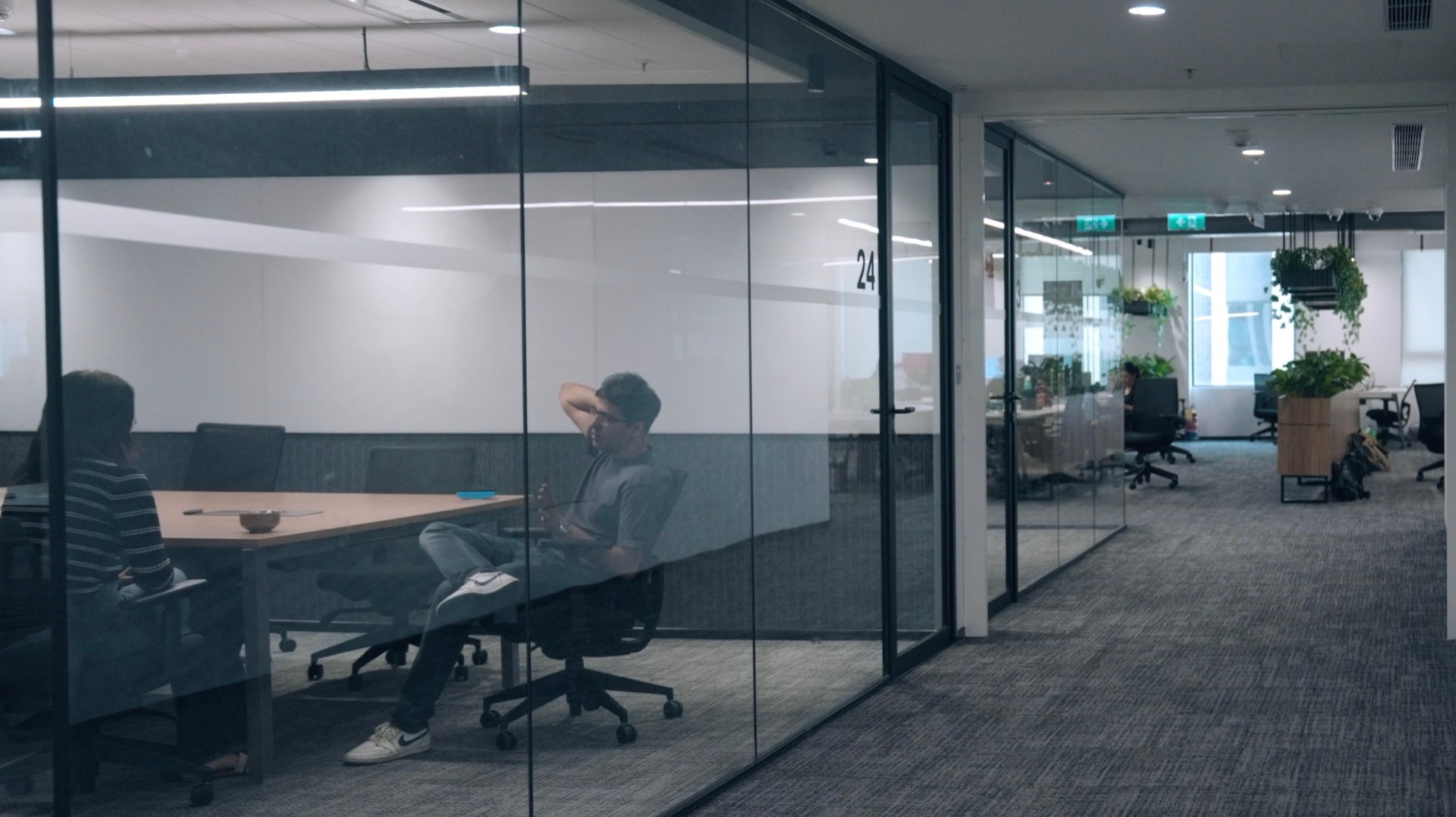
The glass meeting room looks beautiful on camera. It’s also the hardest kind of room to shoot in.
Glass walls
Every wall is a mirror.Glass on both sides, so every surface could show a camera, a light or a crew member. Each angle was found so the glass reflected the office, not the shoot.
Blocking
Three cameras, nowhere to hide.The two of them, three cameras, the crew and the lights all had to be blocked around the table so no camera caught another, directly or in a reflection, and every angle still had a clean background.
The cafeteria
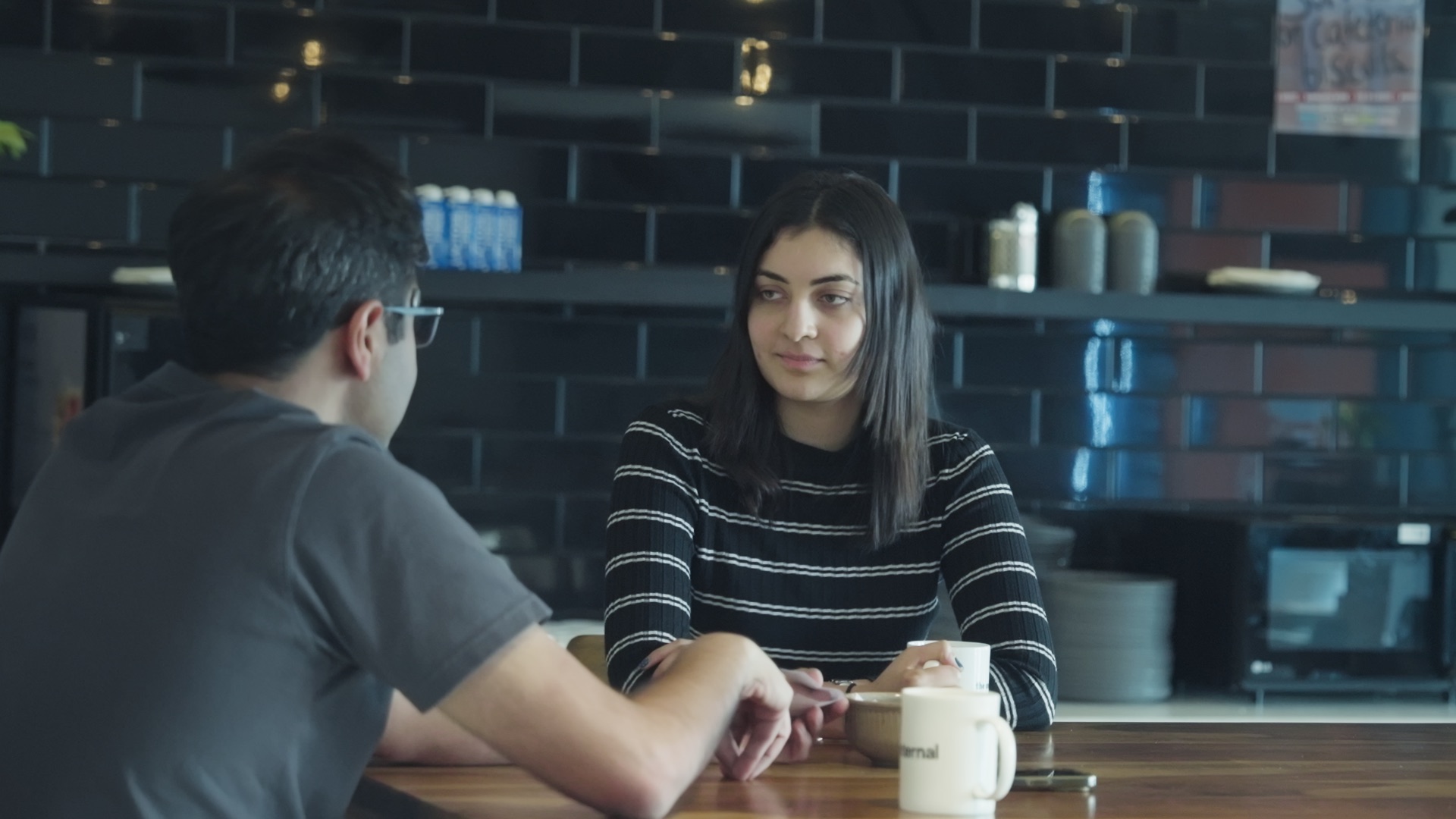
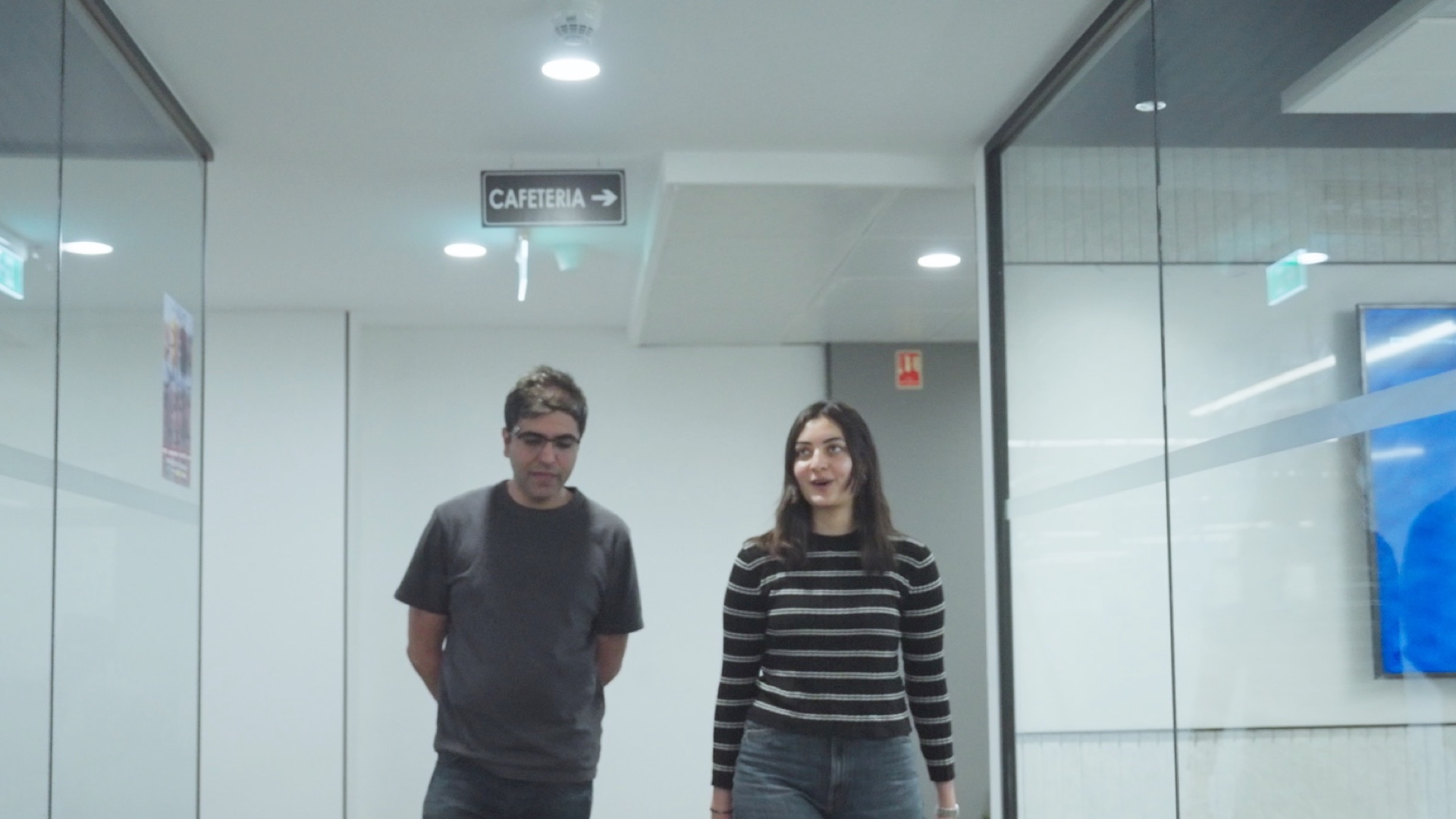
An open room that didn’t stop.Not everyone knew a shoot was on: people walked through, and the dishwashing kept breaking the momentum. The team took a breather, reset and shot it. Every noisy minute became insert time: one of them chatted with the two of them up close, while the other filmed hands, eyes and faces.
The edit
The edit: story first, then non-linear
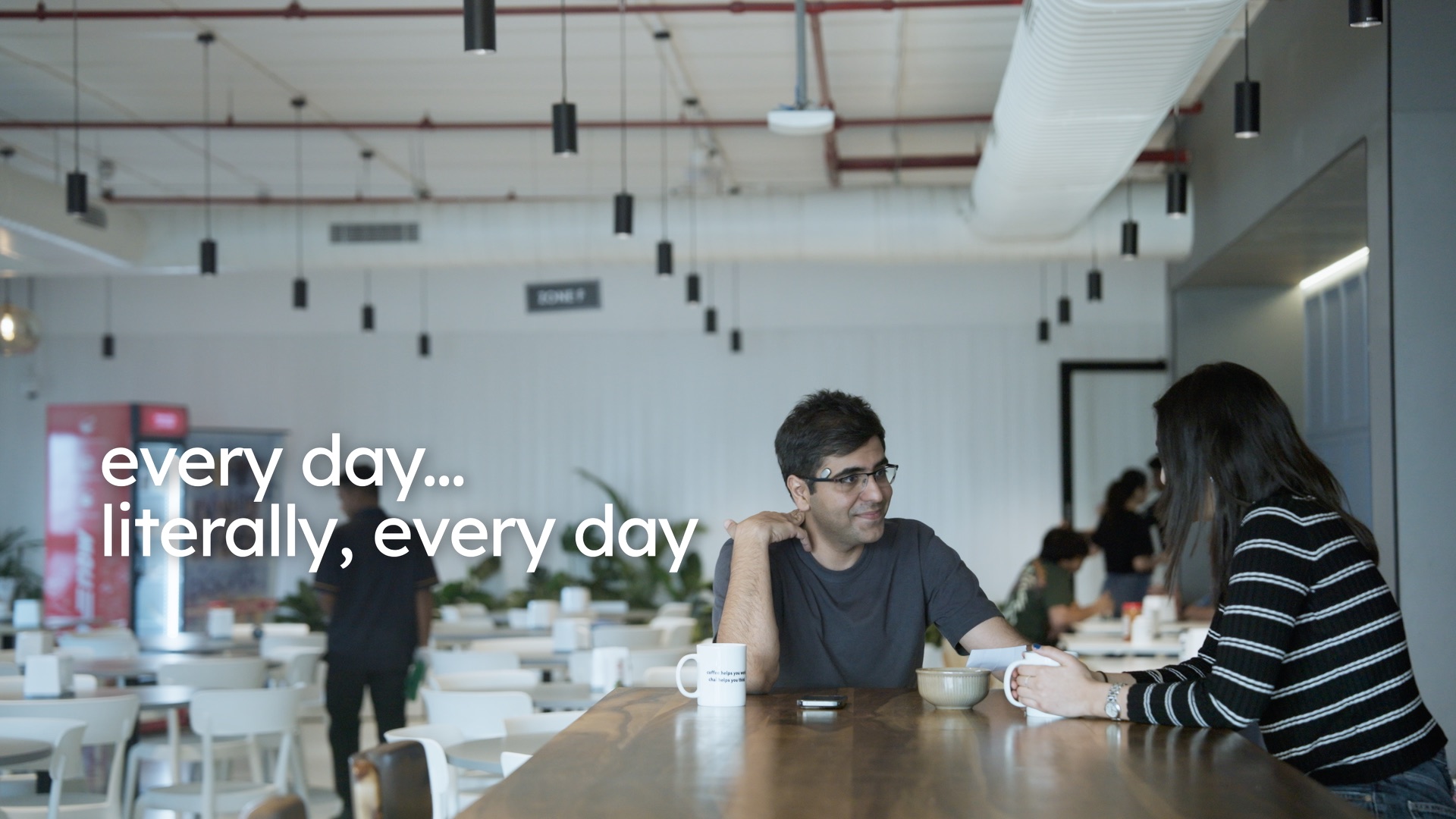
Three locations for three parts of the story: the journey, the current stint, and the final advice. The conversation was laid out in the order it was spoken and weighed answer by answer: what creates intrigue, what doesn’t. Then the edit went non-linear, breaking the spaces into sections and intertwining them, because a long conversation in one space goes stale. Three answers could have opened the film. The Diwali 2015 story won: he starts telling it at 1:26, and its peak moves to the very first second.
45 shots · 2:06The arc is the hook: the peak of the Diwali story, from 1:33, opens the film. Each shot is drawn at its true length and coloured by where it was shot; select one to watch from that moment.
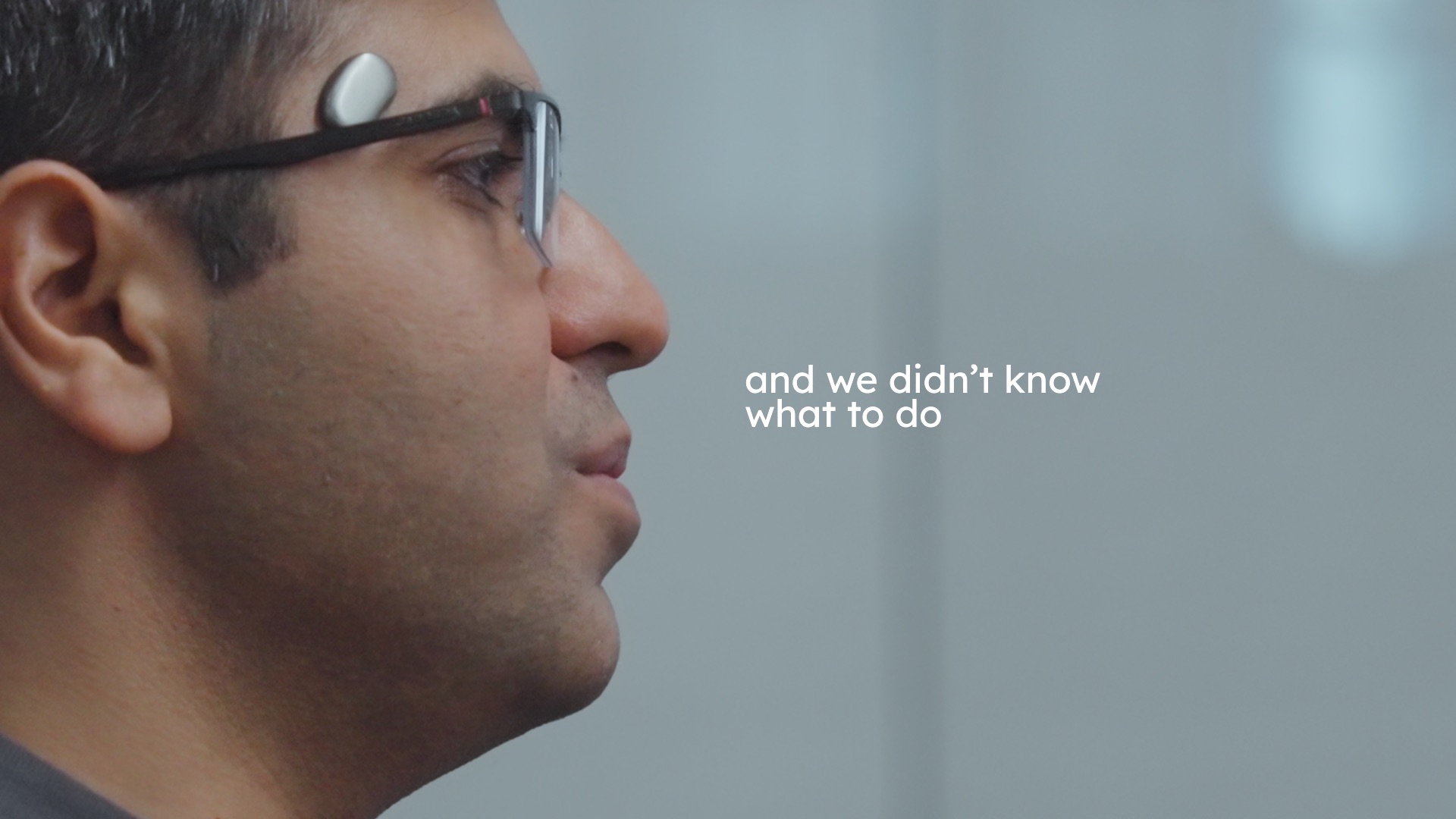
Each question pops up in clean type, the way OpenAI and Anthropic set text in their films. The one answer in type is the hook’s. Neat, quiet, professional.
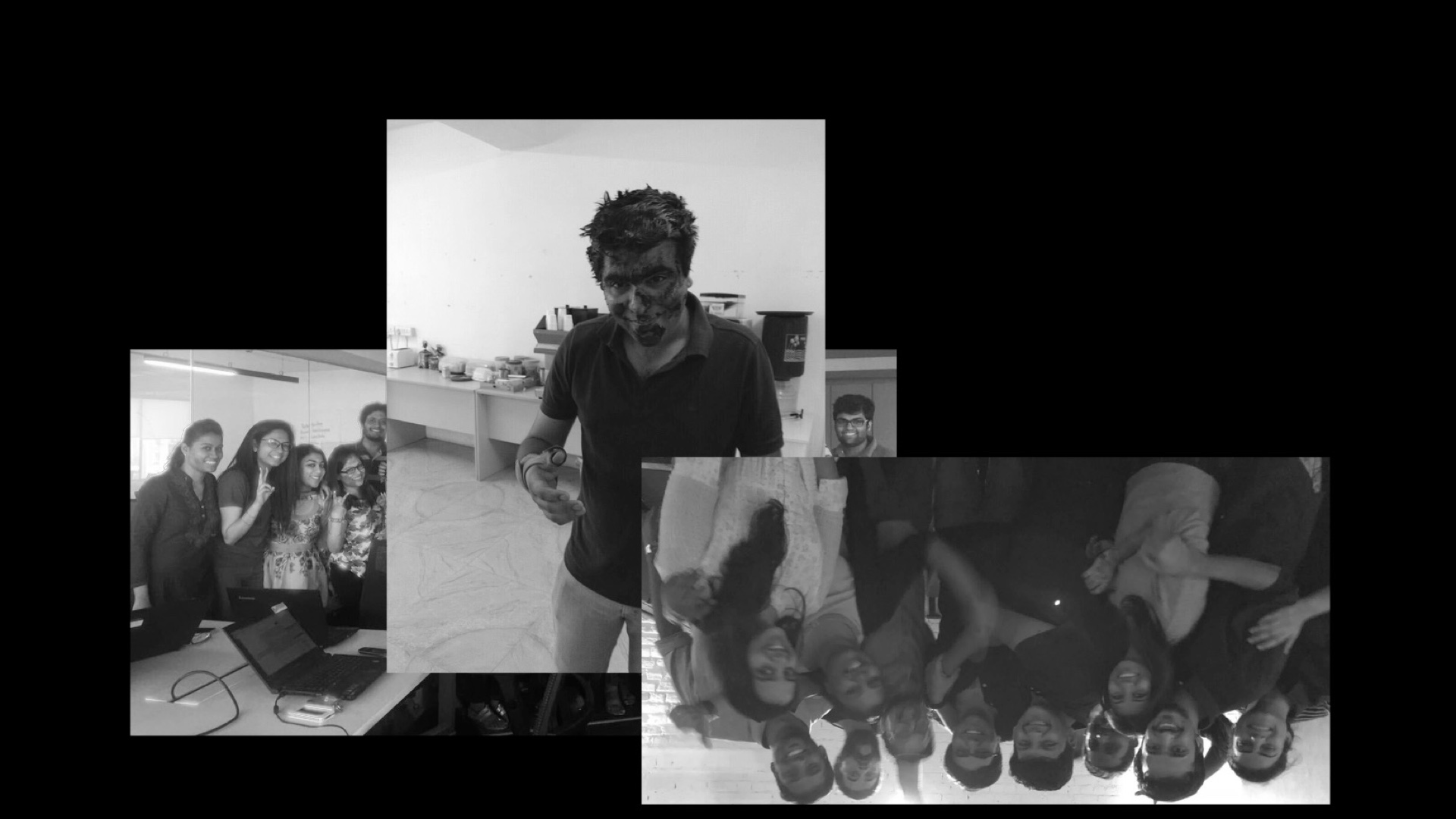
Black-and-white photos of his friends and his first stint, so the story has a then as well as a now.
Subtle, subdued, almost in the background. Deliberately not the bland IT-company bed: it had to feel premium, and different.
Maahira’s reactions are woven through, so it plays as a conversation, not a monologue.
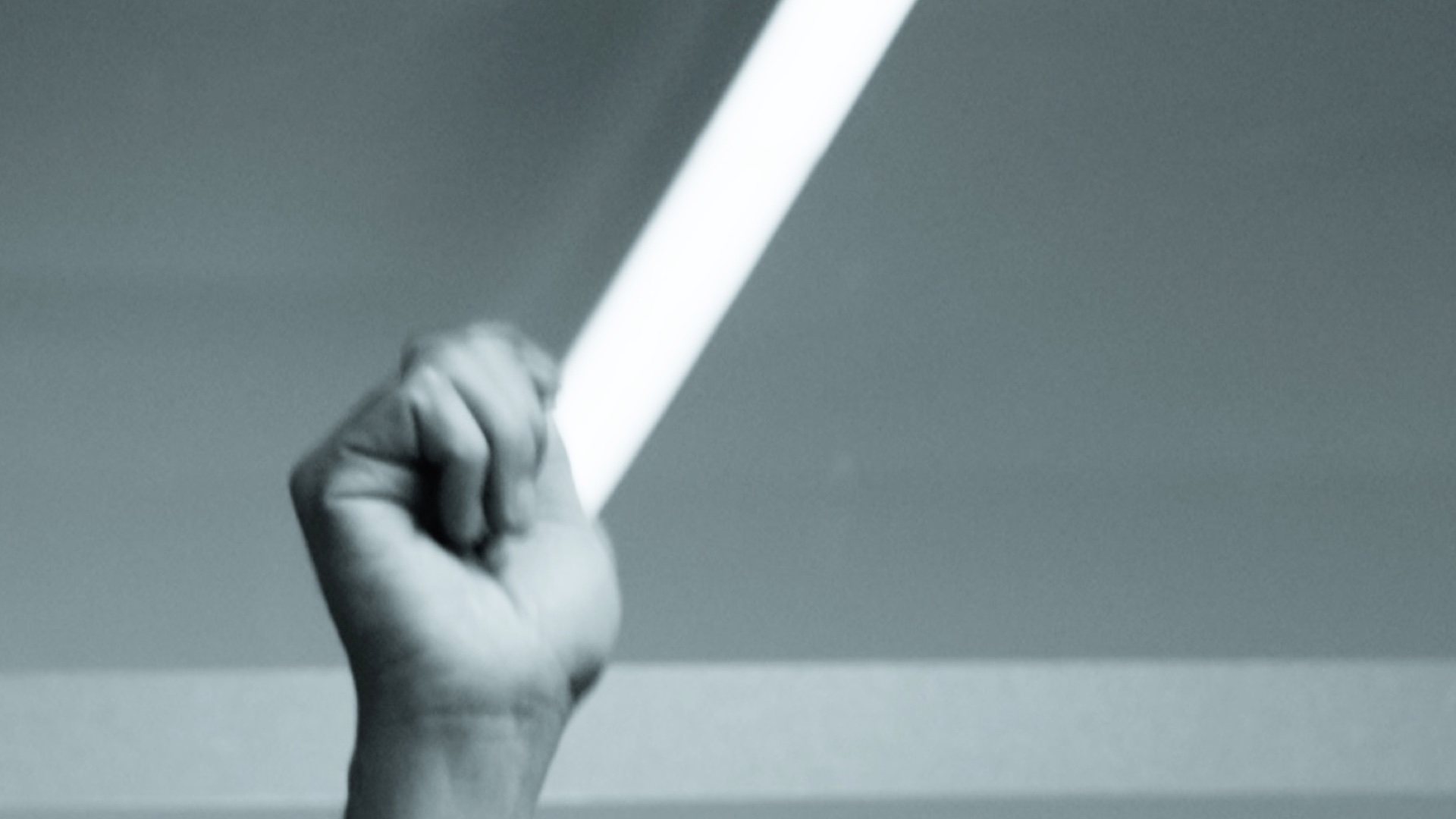
Hands, chits, eyes and the bell: gathered in every spare second on set, and used to cut in and out of answers cleanly.
The three spaces are cut into each other, so it never settles into a podcast, and shows more of the company.
The grade and the look
Minimal, so it looks clean.
Like Mr. Robot: it almost feels like log, with a little colour dialled in on top. Simple, never heavily graded.
Every camera in log, so the grade starts from a soft, open image.
White balance and ISO matched across all three, so the cut never jumps in colour.
Only the essentials, to keep the look clean and true to the office.
A 70–300 from across the room for faces, hands and expressions.
Natural push-ins and pull-outs, done live, to keep a sit-down conversation moving.
The kit
Cameras
- 2 × Sony FX3
- 1 × Sony A7S III
- Extra batteries
- On-camera monitors
- SD cards for every camera
- Shoulder rigs, with sandbags
Lenses
- 2 × Sony 24–70
- 1 × 16–24
- 1 × 70–300, for the tight shots
Support & sound
- 2 tripods
- 2 lapel mics
- Zoom recorder
- Audio mixer and sound card
Crew
- Direction & DOP: Sreeram
- Camera: Srishti Sharma
- Copywriter: Pritika Agarwal
- Camera assistant
- Sound recordist
To everyone who has left
The door is still open.
Credits
- Direction & DOP
- Sreeram
- Camera
- Srishti Sharma
- Lead copywriter · pre-interview & questions
- Pritika Agarwal
- Series format, edit & design
- Sreeram
- Back at Eternal
- Anubhav Soni, Growth Head
- Fresh at Eternal
- Maahira Jain, People Operations